A cross-cultural approach to intelligence

Artificial Intelligence+Wisdom Intelligence
AI gives us capability. Wisdom gives it direction. The world needs both, and no single culture can supply the second alone.
Explore the practiceWhy now
 The guardrails cannot be written by the builders alone
Scientists who built these systems and politicians who must govern them now share the same worry: that powerful tools will be used wrongly, or turned into weapons, before anyone has agreed on what they are for.
That worry is mostly about what happens after the harm. AIWI© starts earlier. It asks what humanity already knows about thinking well, in the West and in the East, and offers that knowledge to everyone who will live with these tools. It has no financial motive and no side to defend.
The charter
Seven basic ideas
Intelligence is not wisdom
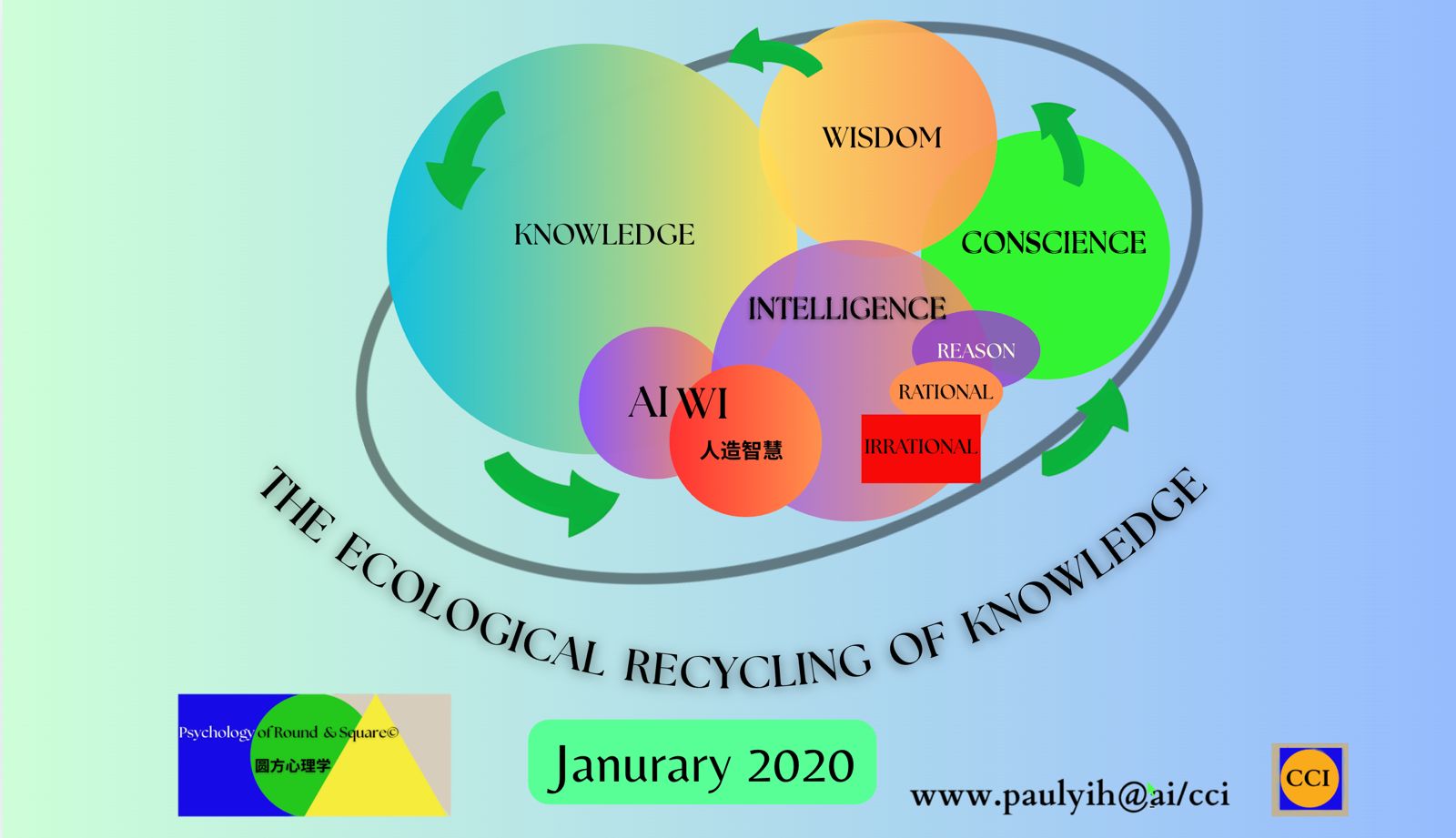
AI supplies knowledge and calculation at scale. Wisdom Intelligence supplies Reason, Conscience and Wisdom working as one cycle. Capability without that cycle is dark intelligence.
Conscience comes first
The moral signal arrives before the argument does. This is the Pre-Cognitive Conscience Hypothesis, PCCH©. The paradinha, the little stop, protects that signal before rationalization overrides it.
Prevention, not cure
Guardrails belong in the structure from the first day. An audit after the loss is too late for the people who were harmed.
Transparency is the working condition
Abuse grows where no one can see the whole operation. Whoever can see across every floor and every language can keep it honest.
No single cultural sphere is enough
The Socratic line and the line of Confucius, Laozi and the Buddha must both be at the table. A system built from one civilization inherits that civilization's blind spots.
A grammar anyone can use
Round, square and triangle let a student, a parolee or a minister name what is happening in a decision without specialist vocabulary.
Accountability is recorded
What was taken, by whom, and who inherits the liability goes into a ledger. Every system is judged by the same test, whatever its flag.
Psychology of Round and Square, PRS©
Three shapes for marking any decision
Round
Reason, Conscience and Wisdom at work together. Open, fair to everyone the decision touches. From 天圓, the round heaven.
Square
Rationalized. The argument is tidy, but it was built to justify what someone already wanted. From 地方, the square earth.
Triangle
The square turned on its point. Anger, fear, the offensive move. The irrational, acting before any pause.
Three paths, none demonized
What each tradition kept, and what it set aside
AIWI© does not rank these paths. It sets them side by side so that people can see them clearly and choose. As Deng Xiaoping said of cats, the color matters less than whether it catches mice.
The examined life
Socrates, Athens, 5th century BCE. Question everything, yourself first. He spoke of an inner voice that told him to stop before he reasoned why.
Reading "Reason, Conscience, Wisdom" as his trio is this platform's interpretation. He wrote nothing; we know him mainly through Plato.
Faith and authority
From Paul of Tarsus to Augustine, Christian thinkers joined Plato's philosophy to revealed faith. Conscience stayed, but it was placed under an external authority.
This path also produced its own questioners: Wycliffe, Hus, Luther, and later the liberation theologians.
The Chinese confluence
Confucius drew a moral code from Zhou practice. Laozi taught the Dao. Buddhism arrived from India centuries later and became Chan, or Zen. The three learned to live together.
This path was broken too, by the Qin book burning and by the Cultural Revolution. No tradition has clean hands.
Where the method was tested
A restaurant floor in Chicago, 1973
- 300+
- staff on one operation
- 4
- working languages: Cantonese, Spanish, English, and a Swiss manager's French
- 0
- people who could see the whole floor before the controls existed
Before graduate school in counseling, Paul Yih ran the dining room, ordering and food-cost accounts of one of the highest-earning restaurants in a national hotel chain. Small thefts at the bar and on the floor were costing thousands.
He did not hunt thieves. He rebuilt the structure so the rationalized small theft became hard to do and easy to see. Nobody was labeled sick or evil. The system had been rewarding the wrong behavior, and he changed the system.
That is the AIWI© answer to weaponized technology and to war for profit: change the structure that pays for it.
Try it
Take a paradinha
Pick any decision: yours, your company's, your government's, or one from history. Pause on it, answer three questions, and mark it. Change the example below to make your own card.
A company ships an AI product before its safety review is finished, to beat a rival.
- Reason
- The review exists because earlier releases caused harm that was found late.
- Conscience
- Unease, the moment the launch date was moved up.
- Wisdom
- Users who trusted it, and the staff told to stay quiet. They would not call it fair.
- Mark
- Square: rationalized
This card is an example. Edit any field to replace it with yours.